McKinsey & Company

Share this email

LinkedIn Twitter Facebook
Share this email on LinkedIn  >
LinkedIn
Share this email on Twitter  >
Twitter
Share this email on Facebook  >
Facebook
The Shortlist
The Shortlist

OUR BEST IDEAS, QUICK AND CURATED | DECEMBER 16, 2022

Brought to you by Liz Hilton Segel & Homayoun Hatami
Global leaders, Industry & Capabilities Practices

This week, we look at ways that companies can address the continuing trend of employee attrition. Plus, an innovator whose career melds STEM and the humanities, and a Stanford business school professor on how to wield power (for the good). The Shortlist team wishes our readers happy holidays and a wonderful start to the new year.

Image of six people standing at the end of colored lines, representing a bar graph

Every company strives to be resilient. At the center of organizational resilience is a workforce that can bounce back from challenges of all kinds. But first, employees have to be engaged in what they’re doing, feel valued by their boss and team, and be able to envision a future for themselves at their organization. Recent McKinsey research on European attrition rates shows that European workers, like their global peers, are thinking more about quitting their jobs. In fact, one in three may quit in the next three to six months, even in an uncertain European economic environment.

Warning signs. In addition to McKinsey’s continuing research into global Great Attrition trends, a recent survey of employed Gen Z respondents in the US reveals that this cohort—a crucial part of any organization’s future—is more likely to report that the pay they receive for their work does not allow them a good quality of life; they are also less likely than other generations to report feeling recognized and rewarded for their work.

Many companies remain on the back foot amid these employee trends, months and months in. What are some practical ways that employers can build a truly engaged and productive workforce? Of course, compensation and career advancement still matter. But McKinsey research shows that organizations can step back and bolster capabilities at four levels, including building self-sufficient teams that, when held accountable and given ownership of outcomes, feel empowered to carry out strategic plans and stay close to customers.

Investing in the future. Organizations can also find and promote adaptable leaders who take the time to coach team members through changes the organization is facing. Building these capabilities requires an investment in talent and culture: companies that focus on resilient operations, teams, and developing leaders are more likely to attract the kind of top talent who will have a greater chance of success and, in turn, be more likely to perpetuate a cycle of resilience.

And speaking of talent: There’s a lot of talk about the difference between employees who are “quiet quitting” (disengaged employees performing the bare minimum of work required) versus those who are setting appropriate boundaries. With the year-end review season wrapping up, a recent episode of the McKinsey Talks Talent podcast featured McKinsey talent experts Bryan Hancock and Bill Schaninger on how managers can give honest feedback in a moment when employee engagement is down.

Off the charts

Global banking annual review: The roller-coaster ride continues

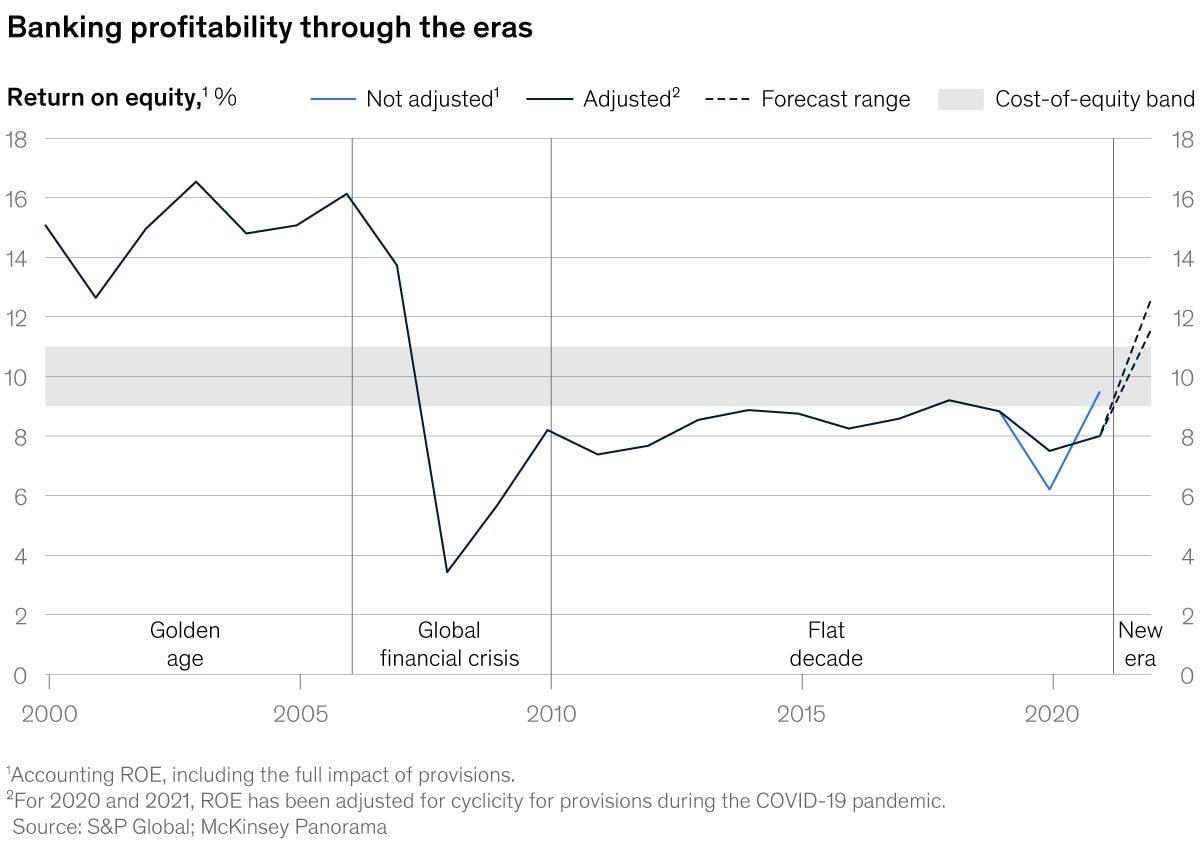
Banks rebounded from the pandemic with strong revenue growth in 2022. Profitability reached a 14-year high, with expected return on equity between 11.5 and 12.5 percent. However, as this year’s Global Banking Annual Review shows, the context has changed dramatically. Now, a series of interrelated shocks—some geopolitical and others lingering economic and social effects of the pandemic—are exacerbating fragilities. While almost all segments of banking have seen improvements, more than half the world’s banks continue to have a return on equity that is below the cost of equity. For the second half of 2022, McKinsey analysis suggests that margin increases delivered returns above the cost of equity for just 35 percent of banks globally. The 2022 report takes a closer look at the roller-coaster ride that banks have experienced over the past months, the growing divergence among banks with different profiles in different countries, and the factors that make the best performers stand out.

Chart of banking profitability in the 21st century
Check out our chart of the day here.

PODCAST

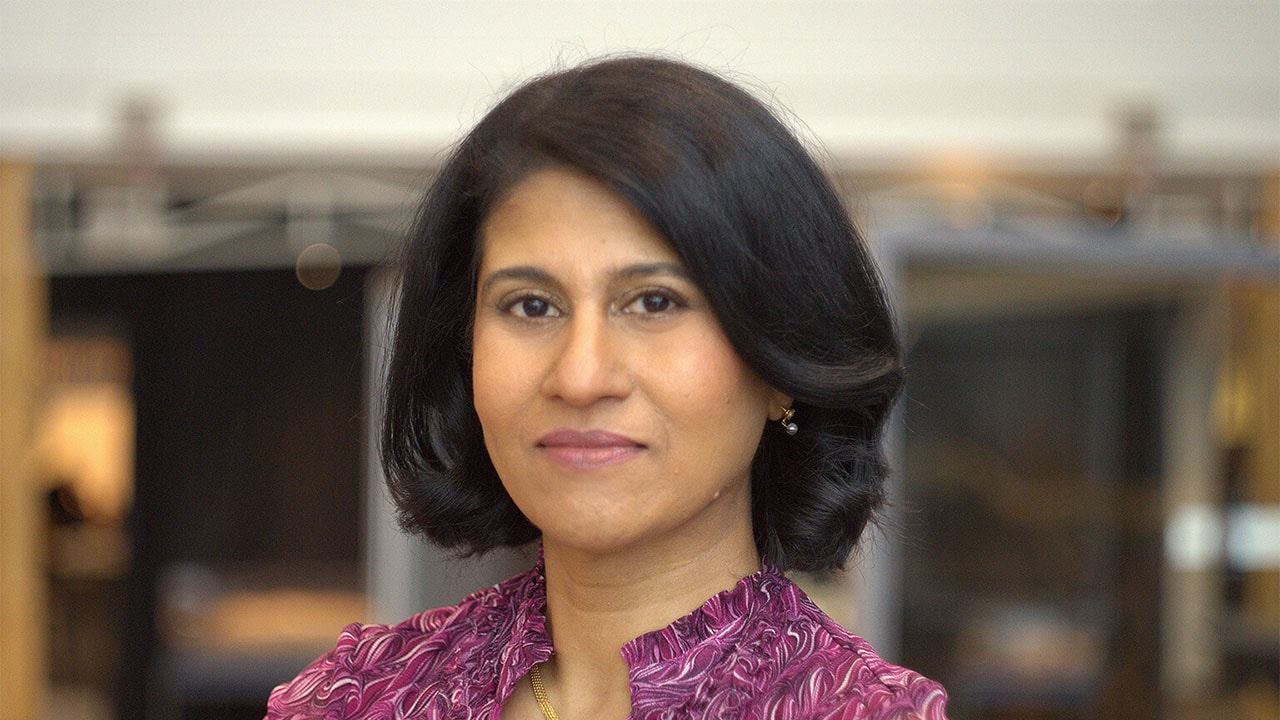
Image of Jayshree Seth

Where is the nexus of science and humanity? Ask Jayshree Seth

Jayshree Seth, an accomplished engineer and innovator, is the first chief science advocate at 3M. In this episode of the McKinsey Global Institute’s Forward Thinking podcast, she speaks with partner Michael Chui about the need to make science more relatable for people around the world. Each year, 3M commissions a global survey to unearth public perceptions about the role of science in people’s lives. “Science is a very human endeavor and does have a strong humanities context,” says Seth. “We just don’t talk about it.” Her team also created a docuseries called Not the Science Type, which highlights the journey of four women scientists and their paths “to shatter the stereotypes of who enters and who persists and who excels in STEM.”

More on McKinsey.com

The state of AI in 2022—and a half decade in review | The fifth consecutive year of global research on AI’s role in business shows that a set of companies seeing the highest financial returns from AI continue to pull ahead of competitors, making larger investments in AI, scaling faster AI development, and faring better in the tight market for AI talent.

Economic conditions outlook | According to the latest McKinsey Global Survey, geopolitical conflicts and inflation remain top of mind for respondents, while concerns about energy volatility predominate in Europe. And nine out of ten respondents report experiencing rising costs in the previous six months.

Australian consumers and inflation | Significant price increases, mortgage rate rises, and energy price spikes have made life in Australia challenging for many. We look at how consumers’ state of mind may affect consumer-facing businesses.

INTERVIEW

Image of Jeff Pfeffer

Three questions for

Jeffrey Pfeffer

In a recent edition of Author Talks, Stanford Graduate School of Business professor Jeffrey Pfeffer discusses his new book, 7 Rules of Power: Surprising—but True—Advice on How to Get Things Done and Advance Your Career, and offers advice for how to gain power through resources, reputation, and relationships. An edited version of the conversation follows.

What is power, and what are its main sources?

I would define power as the ability to get things done your way in contested situations. Different people will have different perspectives, information, and points of view. Almost every decision is going to be somewhat contested, so power is the ability to get your way in these situations.

There are a number of sources of power. One obvious source is control over resources. Do you have budget control? Do you control real-estate assets? Do you control a physical plant? Another source of power is social relationships: the networks that you have built and that you already have. Management leadership is often defined as getting things done through other people. One source of power, therefore, is how many people you know. How many people are in your sphere of influence, so to speak?

A third very important source of power that I think people sometimes underestimate is how you show up. Are you able to act and speak with power? If you’re perceived as a powerful, effective, efficacious leader, that becomes a self-fulfilling prophecy—good people want to work with you, invest with you, and buy from your company. That becomes an important source of power as well.

How can power be used for good?

Don’t confuse the fact that power is sometimes used for evil with power actually being evil. The people who most need to understand power and build their power skills are people who come from backgrounds or have characteristics that would normally put them at a disadvantage.

There is still, unfortunately, discrimination against women. There’s discrimination against people of color. People from lower socioeconomic classes usually start at some disadvantage, and those are the people who most need the power skills because they’re not starting from the 50-yard line, if we’re using a football metaphor. They have to overcome the most obstacles to achieve career success.

Melvin Lerner, the social psychologist, years ago wrote about the just-world hypothesis, in which people feel a sense of control by believing that the world is just and fair. Unfortunately, the world is not just and fair. Don’t opt out of the game before you’ve even started playing—don’t place yourself at a disadvantage.

What advice do you have for rule breaking?

Breaking rules has many advantages. The first advantage of breaking the rules is that it catches people by surprise. We’re trained from the time we’re little to conform. It’s what schools mostly teach you to do, so when you break the rules, it catches people by surprise. How does David beat Goliath? By breaking the rules. Goliath shows up with armor and swords. David figures that if he puts on all this armor, he won’t be able to move, let alone win the battle, so he fights by using a slingshot.

If you want to disrupt an industry, you disrupt the industry by making your own rules. If we talk about social change, the late Congressman John Lewis talked about making good trouble. If you’re going to accomplish social change, if you’re going to accomplish profound change of any kind in any organization, you’re going to need to break the rules.

— Edited by Barbara Tierney, senior editor, New York

Share this Three Questions

LinkedIn
Twitter
Facebook

BACKTALK

Have feedback or other ideas? We’d love to hear from you.

Tell us what you think
McKinsey & Company

Follow our thinking

LinkedIn Facebook Facebook

Share these insights

Did you enjoy this newsletter? Forward it to colleagues and friendsso they can subscribe too. Was this issue forwarded to you? Sign up for it and sample our 40+ other free email subscriptions here.

Copyright © 2022 | McKinsey & Company, 3 World Trade Center, 175 Greenwich Street, New York, NY 10007