| This week, how the banking industry can address a growing pack of challengers. Plus, what employees are saying about the future of remote work, and Denise Woods on the power of voice. |
|
|
|
| Banking surge. A year ago, some of the biggest global banks were girding for trouble, socking away cash as a buffer against potential losses due to the COVID-19 pandemic. But Main Street's pain has largely missed Wall Street, and many of those same banks are now reporting strong earnings, releasing part of their cash cushions and seeing economic recovery ahead. |
| Longer-range challenge. That positions the banking industry to address a decade of competition from digital technology, as well as from the growing pack of challengers with low barriers to entry. Fintechs are attracting millions of new customers—users who are overwhelmingly satisfied with incorporating digital borrowing, trading, or payment platforms into their daily financial activities. So for the industry's incumbents, the need to take bold action is becoming more urgent. |
| Disrupting the disruptors. Options include buying a fintech or partnering with one. However, the best route to growth appears to involve building new digital businesses, and banks have an edge in resources to do so. They have the capital and expertise to turn the tables on new entrants and launch digital attacks of their own in consumer banking, wealth management, payments, and specialist services. Some banks have already shown that it can work: according to a recent McKinsey survey, 65 percent of financial-services businesses that made business building a top three priority saw revenue growth above that of their competitors. |
| Global gusto. Even before the pandemic, digital business models were ascendant, with banks and their digital challengers creating new customer interfaces, streamlining customer journeys, and modernizing middle and back offices. Asia in particular is primed for growth as the region's regulators increase license allocations and set standards for the next wave of digital banks. And like the biggest global banks, financial institutions in Africa are also coming through the pandemic in better shape than they had anticipated, and partnerships with fintechs are among their paths to growth. |
| Deeper engagement. The transition to digital channels creates another opportunity for banks—access to the rich data sets that are required to fuel advanced-analytics and machine-learning decision engines. Decision-making capabilities powered by artificial intelligence can give banks a decisive competitive edge, which we explore in our Bank of the future series. |
|
|

|
|
|
| INTERVIEW |
| For a Russian food retailer, a fork in the road |
| In February 2020, when Russian food retailer Pyaterochka was piloting its express-delivery service, the average volume was about 600 orders a day, says its CEO, Sergei Goncharov. Only a year later, the 17,000-store chain is fulfilling approximately 30,000 online orders daily. In a recent interview, Goncharov said that in a few years he expects grocery-shopping behavior to revolve around two main paradigms: food as a utility and food as a pleasurable experience. “For the things that you always stock in your pantry, consumers will shift to fulfillment by subscription or online delivery. For the second one—choosing your own food and treating meals as an interesting and pleasurable experience—people will go to physical locations like supermarkets.” |
|
|
|
|
|
|
| THREE QUESTIONS FOR |
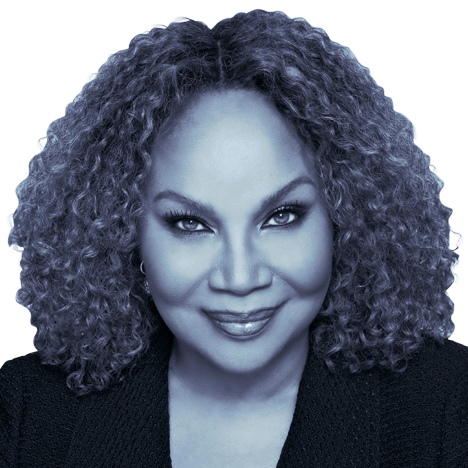
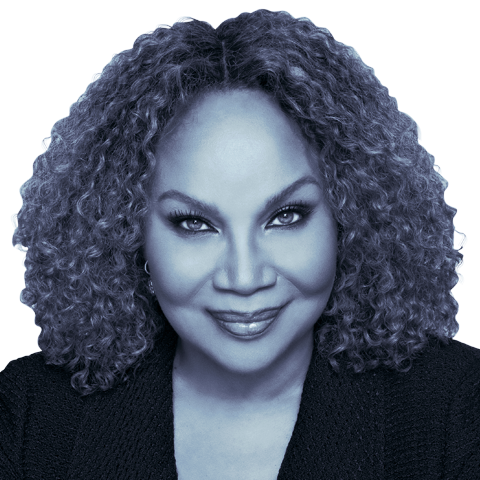
| Denise Woods |
| Denise Woods is one of the nation's most sought-after voice and dialect coaches. In her new book, The Power of Voice: A Guide to Making Yourself Heard (HarperCollins Publishers, January 2021), Woods shares the secrets, tips, lessons, and stories that help people become confident, effective communicators.
|
|
|
|
|
| What holds people back from being effective speakers? |
| The biggest mistake that people make is that they don't breathe. Something very, very simple. You think you're breathing, but you're not. We get the thought, and then we speak, but that's not what we're supposed to do. We get the thought, then we breathe, then we speak. |
| Because breath is to a voice what gasoline is to a car. If you have no gas in your car, your car goes nowhere. The same thing holds true for the voice. If you don't breathe, you have no voice. |
| As you breathe more deeply and go into that emotional wellspring, you will find that all sorts of things—the good, the bad, the wonderful aspects of who we are—start to color your voice, inform your voice, and, ultimately, make your voice more interesting. Particularly for women, it's important that we relax and connect the voice to the breath. A lot of times, we're not relaxed because we feel we have to go in and prove ourselves. |
| What impact has the pandemic had on our voices? |
| In this new age of being masked—either literally being behind a mask or behind a virtual mask on Zoom calls—we now have to use our voices more liberally than ever. In the past, we had physical cues, we had body language, we had gestures. We had all kinds of cues that would let the listener know what we were saying. I'm in a box right now because I'm behind a mask. Typically, when I go out, I'm in a mask, in sunglasses, and I usually have a cap on, so you can't see any of my face. We have to rely on our voices. At this point, it's all we have to really show the fullness of who we are. |
| What message do you want people to take away from this book? |
| Working on your voice means working on your posture, on your delivery, on how you perceive yourself. This work shows you how to bring your full essence to your voice so that you can be heard and respected, so that you can be appreciated for being the unique person that you are. Voices are like fingerprints; no two are the same. |
| A lot of times, we've thought, “Oh well, that's for people who use their voices for a living. That's for actors. They sound stagey, or they sound theatrical.” I'm encouraging everybody to find the theatricality, to find the fun, to find the depth of utilizing their voice. |
| Use this instrument that you've been gifted with. There are some voices that are inherently more beautiful than others; not everyone will sound like James Earl Jones. But we all have our own personal instrument that has depth and beauty and resonance that we can tap into, that will leave an indelible impression. |
| Vibration. That's all voice is. You want people to feel your vibration. You want people to see your vibration. And if anything is in your voice or your speech that detracts from the story, then [you should] address it. But I don't think where you come from, a wonderful lilt of the dialect that you naturally have, is a distraction, because that's a part of who you are. That's your voiceprint, and it should be honored, and it should be respected, and, ultimately, loved. |
| This is an excerpt from a recent edition of our new Author Talks series on McKinsey.com. Check out other interviews in the series, as well as our exclusive lists of business bestsellers on our McKinsey on Books page. |
| — Edited by Barbara Tierney |
|
|
|
| BACKTALK |
| Have feedback or other ideas? We'd love to hear from you. |
|
|
|
|
Did you enjoy this newsletter? Forward it to colleagues and friends so they can subscribe too.
Was this issue forwarded to you? Sign up for it and sample our 40+ other free email subscriptions here.
|
|
|
Copyright © 2021 | McKinsey & Company, 3 World Trade Center, 175 Greenwich Street, New York, NY 10007
|
|
|
|