Ask almost any nonprofit leader about their organization’s priorities and they’re likely to come up with the same goal: increasing impact. Whether working locally or globally, most nonprofits aspire to serve more communities while often tackling social challenges that continue to grow in scale and complexity. Achieving these ambitions demands a deep commitment to the mission, alongside strong internal capabilities that allow teams to work together effectively as the organization grows.
In fact, with nonprofits increasingly being asked to do more with less, building capability has never been more important. According to research from Forvis Mazars, 71% of nonprofits have seen an increase in demand for their programs and services. However, many are struggling to find the people they need to meet this demand, with 74% reporting open vacancies.
To deliver the impact their communities need, nonprofits should look to invest as much in developing their current teams as in hiring staff. After all, building the capabilities of existing teams can be just as powerful as finding new talent.
The deeper value of training
Professional training also plays a vital role in strengthening how nonprofits translate mission into action. By embedding common ways of working in areas such as prioritization, collaboration, and execution, training helps teams scale their efforts without losing focus or cohesion.
Often, the value extends beyond the skills themselves. When people learn together, organizations can develop a shared language, stronger connections across roles, and greater confidence in overcoming challenges. These collateral benefits can reinforce culture while advancing the mission, supporting nonprofits to do more.
McKinsey.org’s recent work with One Acre Fund illustrates these benefits. One Acre Fund is a nonprofit social enterprise headquartered in East Africa. Its model is rooted in sound business practices: supplying smallholder farmers with everything they need to thrive. The organization is in the process of scaling up to serve more farm families across Africa.
McKinsey.org’s training programs are designed to help nonprofits deliver their mission with renewed clarity and confidence. In the case of One Acre Fund, the knock-on benefits of this training have been pronounced.
Showing up in new ways
Ruth Achillah, Global Learning and Development Lead at One Acre Fund, has noticed how team members are collaborating more than ever and working with greater efficiency. “Because we don’t have to explain every step each time, a lot of our work moves faster,” she says.
With team members showing up for work in new ways, the farmers at the heart of One Acre Fund’s mission are benefitting directly.
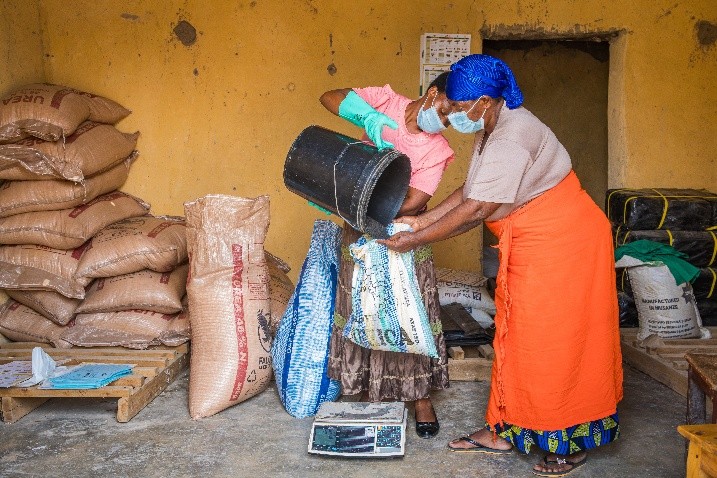
Marie Chantal Umuhoza works as a hospitality specialist at One Acre Fund. For Marie, one significant improvement since the training is that her team is now able to provide what she calls “full-service excellence” to frontline workers. “The training helped us strengthen how we serve those teams and deliver a higher standard of support,” she reports.
This enhanced ability to execute is arguably the most important change to One Acre Fund’s employees’ approach to work. As Leonce Ngaboyakema, Managing Director of One Acre Fund’s Tubura program, notes: “At One Acre Fund, execution is central to everything we do. We’re a team of doers, and we strive to do things well. The program has helped us bridge gaps in how we execute, allowing us to move toward our strategic vision more quickly.”
An organizational shift
Since the training, One Acre Fund’s leadership has seen a broad cultural change take shape across the organization, one that promises to help the organization continue to thrive. Eric Pohlman, CEO of One Acre Fund, explains: “McKinsey.org’s program has fostered a strong culture of professional development and continuous improvement among a large cohort of our staff,” he says.
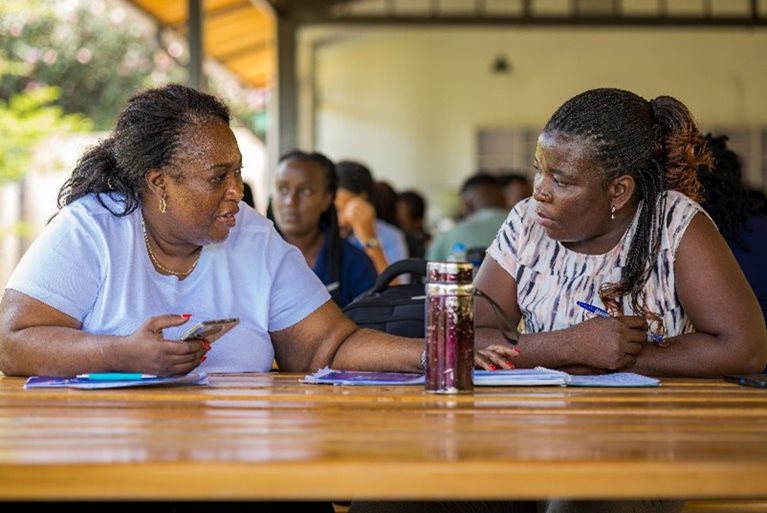
It’s a change that Milindi Sibomana, Chief Agriculture Officer at One Acre Fund, has also noted. “McKinsey’s program allows us to keep that spirit of learning alive but in a way that's informal and accessible to everybody, which is exactly what we want. It's not about technical jargon. It's about how we use the concepts in our day-to-day work,” he says.
Delivering better for stakeholders
For all nonprofits, the ability to deliver impact at scale depends, among other factors, on how well teams can work together to solve problems and come up with new ideas. When nonprofit organizations prioritize shared skills and common ways of working, they can make better decisions and adapt to change more easily. Over time, these internal improvements are reflected in stronger programs, more responsive services, and greater impact.