How Organizational Health is Helping Project Scientist Close the STEM Gap
Jobs in science, technology, engineering, and mathematics (STEM) are expected to grow significantly in the coming years, potentially by up to 23% between 2023 and 2030. However, women continue to be underrepresented in these sectors. Through classroom learning, interactions with real-life role models, and a curriculum rooted in creativity and diversity, Project Scientist aspires to close this gap by empowering girls aged four to eighteen to become leaders, innovators, and disruptors of tomorrow in STEM.
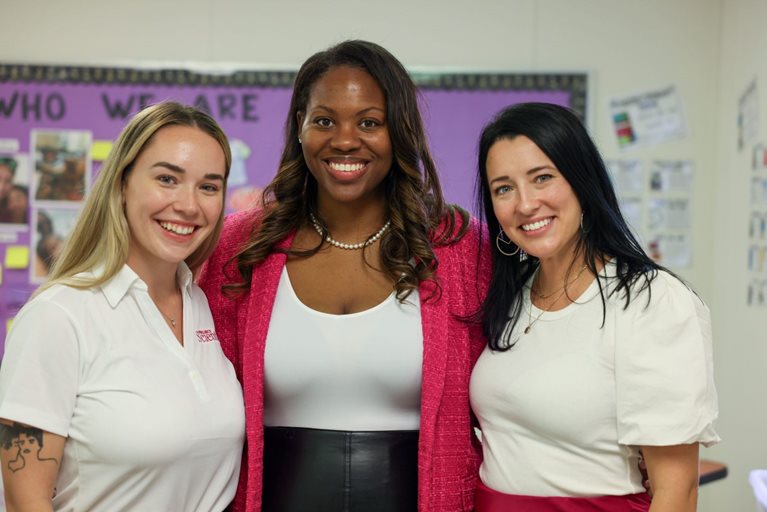
For many participants, the program offers more than STEM learning – it’s a safe space where they can belong, and dream. “There are incredible moments of joy, when our students run through a corporate building wide-eyed, sit in the CEO’s seat, and see women who look like them leading companies. It creates something powerful,” shares Dr. Patrice Johnson, President and CEO of Project Scientist.
One student attended a Project Scientist summer camp while recovering from cancer treatment. Her mom told staff it was the first time her daughter felt like herself again. “She was finally coming out of her shell,” recalls Johnson, “it was overwhelming in the best way.”
Another story came full circle this summer, when one longtime participant returned as a mentor to help guide the next generation of girls. Now a college student studying pediatric physical therapy, the alumna credits Project Scientist with sparking her love for STEM and inspiring her to pursue a career helping young people.
Scaling Impact: Reaching More Girls Every Year
Since being founded in 2013, Project Scientist has delivered over 134,000 STEM experiences to more than 27,000 girls across the U.S. and Mexico.
Now, their focus is on scaling that impact, aiming to reach 5,000 girls annually as of 2026. “We’ve seen incredible growth over the past year,” says Johnson. “Looking ahead, our goal is to grow with purpose. If we do this right, we’ll be here for 50 years and beyond.”
A Culture Worth Keeping
As Project Scientist continues to grow, protecting its culture is imperative. The organization operates remotely, yet its sense of connection runs deep. Built on four core values – community, empowerment, joy, and equity – Project Scientist’s culture reflects the principles it teaches students. “Our leaders model the same empowerment and equity they want for our girls,” explains Jacki Lane, Director of Education Programs at Project Scientist.
Ensuring Organizational Health During a Leadership Transition
The Project Scientist team participated in McKinsey.org’s Organizational Health Index (OHI) for Nonprofits program to scale its impact and get a data-driven perspective on how its culture supports those goals.
OHI for Nonprofits takes a deep look at how organizations work, measuring nine outcomes and 55 practices of health and benchmarking them with peers across the sector. Supported by more than two decades of research, OHI for Nonprofits helps leaders understand how their teams work together to deliver on their mission and shape changes that lead to long-term success.
Project Scientist’s first OHI for Nonprofits survey was run at a critical moment for the organization. Sarah Witsken (White), Senior Director of Operations at Project Scientist, explains: “Our Founder and CEO was transitioning out, and Johnson was just coming on board. As a young professional, I didn’t yet know how to take the pulse of a team or identify what was working. OHI for Nonprofits armed me with objective data and insights and gave me confidence and credibility in conversations with the Board.”
“When I joined, the survey had just been completed, and it became one of the first tools I turned to,” Johnson shares. “It gave me a clear benchmark for where we stood and where we needed to go. It set a standard, and once you give me a standard, I’m going to chase it.”
Improving Focus and Efficiency
Project Scientist knew it wanted to focus on the financials. The OHI results provided insight into its efficiency, helping the nonprofit identify what behaviors to keep, what to improve, and what to put aside. “People often underestimate how efficient nonprofits have to be,” Johnson comments. “We’re accountable to the communities we serve, and we have to operate with the same level of excellence you’d expect from a Fortune 500 company.” By streamlining processes and optimizing expenditures, Project Scientist was able to invest 18% more of its revenue back into programs.
Using data from the OHI for Nonprofits program, Project Scientist has also built stronger systems and a more connected team. The organization introduced clearer procedures, accountability structures, and stronger communication practices. Regular check-ins have evolved into more focused conversations, and the team now uses well-defined standard operating procedures to bring consistency and efficiency to program delivery.
Leveraging the OHI results, Project Scientist has also strengthened its professional development pathways so every team member can see where they’re headed next. “We’ve built a culture of ownership,” Johnson explains. “Everyone knows their role, their capacity, and where they’re growing.” The results are smoother collaboration, better work-life balance, and a team empowered to speak up and shape how they work.
Putting Impact First
Two years since first partaking in the OHI for Nonprofits program, Project Scientist has transformed the way it works together to deliver on its mission. Johnson explains: “Because of the changes we made operationally, we’ve been able to support more students and put more resources directly into our programs, and that’s the ultimate goal.”
“The OHI gave us the foundation of strong systems, clear communication, and intentional leadership at every level,” comments Lane. As a result, program managers remain closely connected to the girls, schools, and partners they serve, maintaining that vital link to the organization’s grassroots.
By focusing on its organizational health, Project Scientist is pursuing its ambitions for growth, while modeling the same leadership behaviors it inspires in every girl it serves.