“Yesterday, I received a very special invitation,” says Li Qi, Secretary-General of the Wispring Education Development Foundation (弘慧基金会). “One of the children we supported during our early days is getting married, and he invited me to his wedding. He was especially grateful for the support we provided through his middle and high school years. It opened new possibilities and gave him hope for the future.”
Stories like this – each life transformed – keep nonprofit professionals motivated. But as these organizations grow, they often realize the traditional passion-driven model is no longer enough to manage increasingly complex operations. Lack of resources and of a unified operating culture can restrict their growth and reduce their potential to create broader social impact.
To address this, McKinsey.org developed the Ability to Execute (A2E) for Nonprofits program, designed to strengthen the operational capabilities of nonprofits. Offered free of charge to non-profits, the six-month program helps organizations to boost nine core capabilities.
“A2E is far more than a one-way teaching model where we deliver content and participants passively receive it,” says Yimeng Zheng, an external advisor at McKinsey and recurring volunteer instructor for A2E in Greater China. “It creates a dynamic, peer-driven learning environment where participants learn from one another, exchange experiences, and hold each other accountable for action. It’s a rare opportunity for nonprofits to co-learn, co-create, and co-practice across organizations.”
Focusing on what matters most
Since February 2024, over 400 frontline staff and senior leaders across 20 nonprofits in Greater China have gone through the A2E for Nonprofits program. Among the nine core capabilities explored, one skill often stands out: prioritizing what truly matters by focusing on ‘big rocks’, the tasks that are most critical to delivering on the mission.
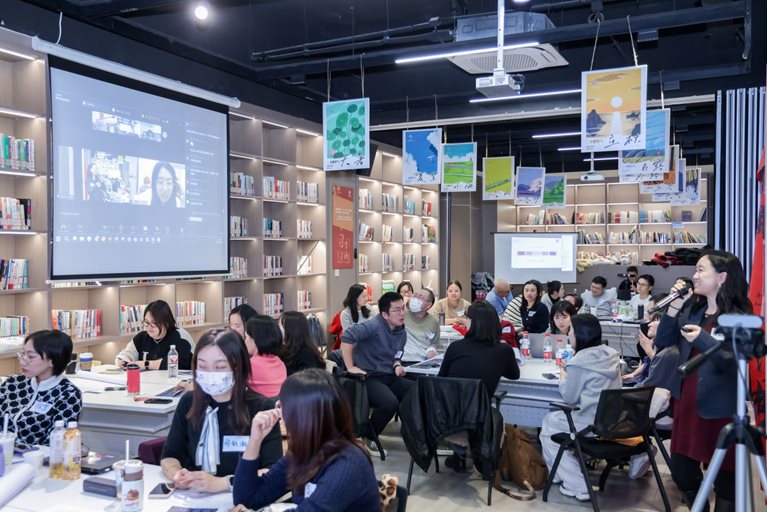
Nonprofits often face complex and constantly evolving societal challenges. For example, the Wispring Education Development Foundation must conduct fundamental research while navigating a rapidly changing educational landscape, which can leave staff overwhelmed.
For smaller organizations with limited resources, the value of this approach is even greater. Wang Bo, founder of the Tongxin Children Space (同心儿童友好空间), says: “We used to spend all our time firefighting, constantly reacting to urgent demands. By learning to differentiate between ‘big rocks’ and ‘pebbles’, we’ve shifted from emergency responders to strategic planners. This transformation has not only improved our efficiency but has also fundamentally reshaped how our team works.”
Perhaps the most remarkable impact has been a cultural shift across participating organizations. Peng Yanni, Secretary-General of Narada Foundation, says: “Today, ‘big rocks’ has become part of our organizational language – almost a shared shorthand. From weekly reports to annual planning, every team member can clearly define their own priorities. This common language has broken down silos, naturally aligning the entire organization’s energy toward its strategic goals.”
Inclusivity to spark innovation
Innovation bottlenecks offer another challenge to nonprofits, which A2E addresses through the ‘yes, and’ tool for brainstorming and idea-sharing. Instead of rushing to evaluate others’ contributions, participants are encouraged to first affirm the value of an idea (“Yes”) and then build upon it (“And”) to explore additional possibilities. This shift creates a more inclusive, safe, and open environment, enabling organizations to transform spontaneous sparks of creativity into sustainable innovation outcomes.
“Starting with ‘yes’ allows us to first acknowledge and appreciate each contribution,” says Wispring’s Li Qi. This inclusive style of communication establishes a safe and supportive environment, making younger team members more willing to express bolder ideas.
Teach For China (美丽中国) took this one step further by embedding the tool into its daily operations. “Previously, our weekly check-ins were mostly simple status updates,” says Wang Jiakai, Director of the Support Services Department. “Now, they’ve become sessions of mutual support and collective inspiration. Team members bring up topics for discussion, and by using the ‘yes, and’ approach, we’ve started generating unexpected solutions that fuel cross-project creativity and drive entirely new ideas.”
Energy management and wellbeing
For many leaders, burnout has become a silent barrier to impact. “In the past, we were involved in every single detail and handled everything ourselves,” says Wang Bo, founder of the Tongxin Children Center. “From Monday through Sunday, we were always on – and at the start of each month, the accumulated pressure would peak. I was constantly on edge, operating inefficiently, emotionally volatile, and even undermining team collaboration.”
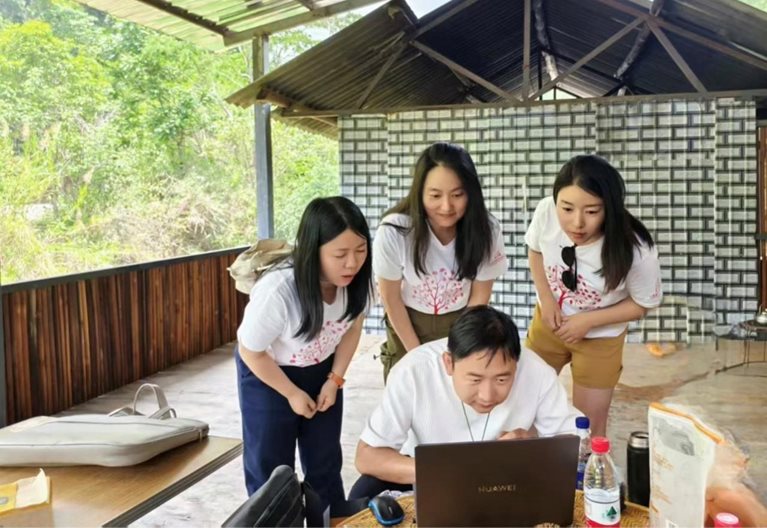
The turning point came when Wang introduced A2E’s energy management techniques. By systematically tracking his energy highs and lows, he began making key adjustments: blocking time each week for exercise and recovery, and scheduling restorative activities during high-pressure periods.
The results were immediate. “When my mental and physical state improved, I became more attuned to my colleagues’ needs, and team collaboration naturally became smoother,” Wang says. This shift also sparked a positive ripple effect across the organization: project execution improved, supportive team interactions increased, and the overall organizational climate became significantly healthier.
“Nonprofits often focus almost exclusively on organizational performance and rarely discuss personal energy,” explains Charlene Ren, a Learning Specialist for McKinsey.org. “By creating space for conversations around energy management, we’ve given people permission to rethink how they protect their own well-being and how to help their teams find a better balance. This could become a valuable opportunity for organizations to grow in a healthier way.”
Inheriting a century of wisdom
Each nonprofit carries its own bold vision for growth. Tongxin Children’s Center aspires to replicate its community library model across 10,000 rural villages, while the Wispring Education Development Foundation aims to ensure that the over 3,000 rural children they support every year can integrate into society with dignity and confidence.
The A2E for Nonprofits team works closely with nonprofit staff over six months to strengthen their organizational foundations to move forward into the future with greater confidence. After completing the program, Teach For China launched a “Sustain & Embed” initiative to reinforce newly acquired skills and gradually integrate them into institutional processes. Meanwhile, the Wispring Education Development Foundation has embedded A2E’s key skill sets into its organizational culture, tracking the development of these skills as part of annual employee performance reviews.
“The true value of A2E lies not only in the six-month program itself,” says Annie Kong, McKinsey’s Global Social Responsibility Manager. “Its long-term impact comes from transforming some of these nine core skills into part of an organization’s DNA, weaving them into its systems, culture, and ways of working.”
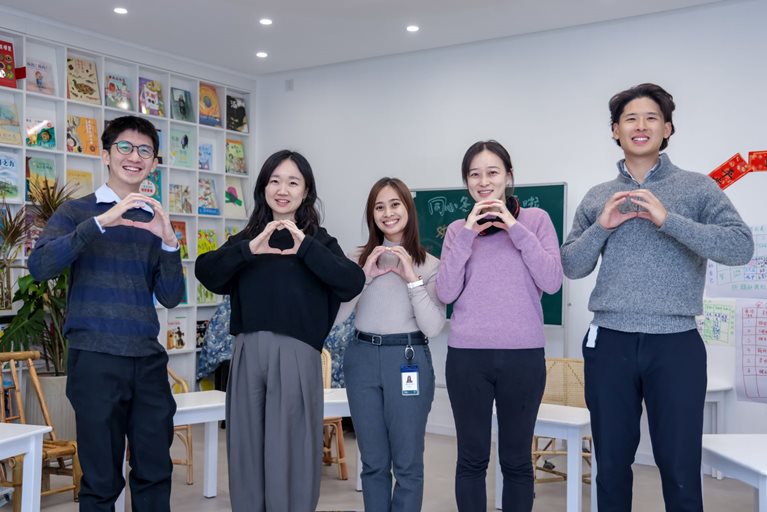
The success of the A2E for Nonprofits program relies heavily on the volunteer efforts and active participation of McKinsey colleagues. “It’s deeply rewarding to see how A2E – a toolkit of workplace-standard capabilities – offers the nonprofit sector a foundational skills framework,” says Lili Li, a McKinsey Engagement Manager and long-time volunteer facilitator for A2E for Nonprofits workshops.
“As McKinsey approaches its centennial, we aspire to grow alongside China’s nonprofit sector by providing training in universally applicable workplace skills, while envisioning the day when we will watch these nonprofits celebrate their own centennials,” adds Carey Zhao, a Senior HR Generalist at McKinsey who has served twice as an A2E workshop coordinator.
Looking forward, the skills from A2E for Nonprofits program will continue to support Chinese nonprofit organizations in building future-ready capabilities, enabling them to professionalize operations while staying true to their founding purpose. When a passion for social good is intertwined with professional methodologies, nonprofits will set off a powerful wave of social innovation, driving China’s philanthropic ecosystem toward new heights.